

The Empowered Universe
Round Three Has Arrived
The Empowered Universe is back for round three! Empowered Aging is excited to continue our series celebrating the extraordinary strength, wizdom, and advocacy of our senior community. Each month, we introduce a new member of the Wizdom Warriors, a league of Senior Super-Heroes, each one built around a real resource, a protected right, or a personal strength that helps older adults live with dignity, safety, and joy.
These heroes aren’t just fun characters. They’re a creative way to ensure the issues that matter most to seniors (elder justice, fraud prevention, social isolation, healthcare access, and so much more) are seen, understood, and celebrated. Behind every cape is a real cause. Behind every superpower is a real resource you or someone you love can actually use.
Following Beatrice “The Voice” Jenkins and Clara “The Catalyst” Sterling, we are honored to introduce the third Wizdom Warrior to step into the spotlight.

September: The Justice League Leader
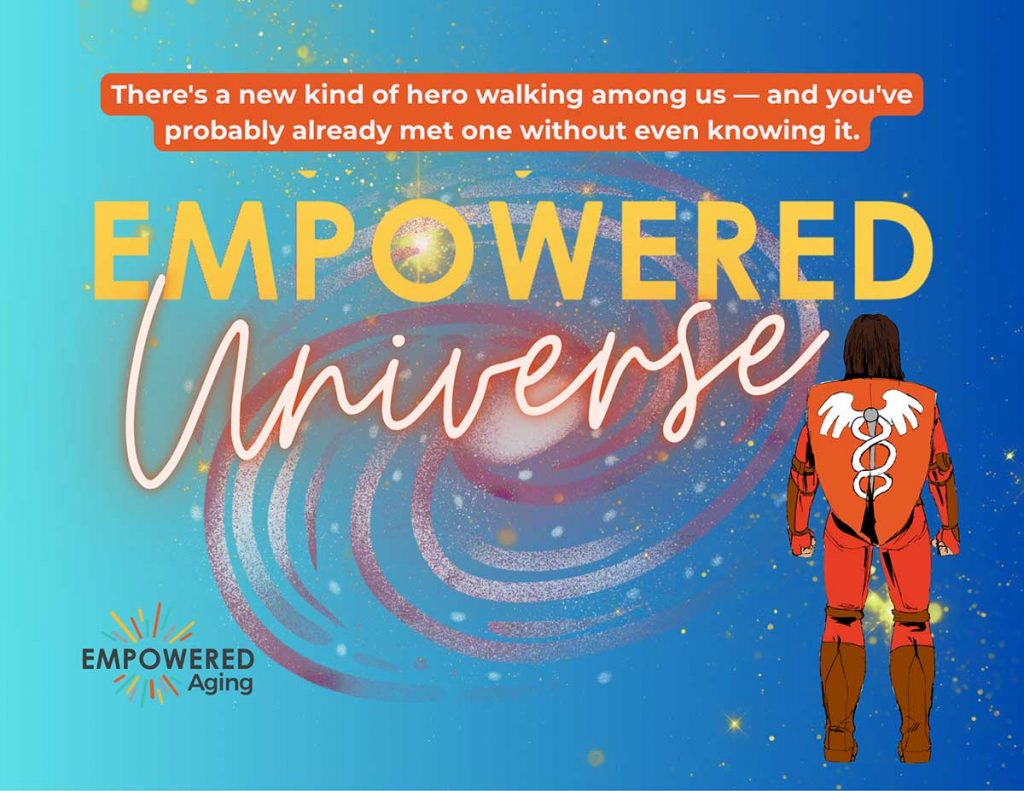
Meet Ramona “The Shield” Martinez
Age: 69 | Superpower: Justice Beam
Mission: Teaching our community to recognize the warning signs of elder abuse, and how to use the Elder Justice League and Adult Protective Services to stop it.
Long before she became an Empowered, Ramona Martinez was the nurse who noticed what everyone else missed.
She spent thirty-one years in Bay Area emergency rooms and, later, in home health care. She had a gift for seeing the story behind the chart: the bruise that didn’t match the explanation, the daughter who answered every question for her mother, the patient who flinched when a certain relative walked in. Ramona learned early that abuse rarely announces itself. It hides in small details, in quiet rooms, and in the silence of people who are afraid, ashamed, or convinced that no one will believe them. She made it her habit to notice, to ask the second question, and to make the call. She never worried about being wrong, because she would rather be wrong than silent.
Then, at 69, something shifted. Ramona became Empowered.
Her instincts, already sharp, became something more. Ramona now carries an unyielding aura, a steady and radiant force the Wizdom Warriors call the Justice Beam. It detects elder abuse, psychological neglect, and physical harm the moment they are present. Where the Beam shines, harm is repelled, and a room that felt unsafe becomes a safe haven for a vulnerable adult who has been waiting for someone to notice.
But Ramona will be the first to tell you the Beam has limits. It can detect harm, but it takes people to act on it. A shield is only as strong as the hands that hold it up. That is why Ramona works alongside the real-life heroes who protect older adults every day: Adult Protective Services social workers, the Elder Justice League, Ombudsmen, doctors and nurses, bank tellers who spot suspicious withdrawals, home health aides, faith leaders, and neighbors who knock on a door when something feels wrong. Her mission is to make sure every one of us knows we can be part of that circle of protection.
Why Ramona? Why Now?
Elder abuse is not one thing. It can be physical harm, emotional or psychological mistreatment, neglect, abandonment, or financial exploitation. It is often committed by someone the older adult knows and trusts, which is exactly why it so often goes unreported.
The warning signs can be subtle. Watch for:
- Unexplained injuries
- Sudden withdrawal from friends and activities
- Fearfulness around a particular person
- Poor hygiene or unexplained weight loss
- Unpaid bills despite adequate income
- A caregiver who won’t let anyone spend time alone with the older adult
If you notice something, you do not need proof to speak up. A concern is enough. Adult Protective Services exists to look into it, and the Elder Justice League exists to support older adults and their families. If someone is in immediate danger, call 911.
In the issues ahead, watch for Ramona’s Justice Beam in action, a plain-language guide to the different types of elder abuse and their warning signs, and a closer look at how to make a report and what happens after you do.
Have a story about someone who noticed the signs and spoke up? We’d love to feature it in an upcoming issue.